Car Insurance Claim After an Accident in 2026: A Clear Step-by-Step Guide
First make the scene safe
A collision can leave you shaken even when the damage looks small. Before thinking about a claim, check for injuries and immediate danger. Call local emergency services when someone needs help or the road is unsafe. If the law and conditions allow, move the vehicle to a safer place and switch on hazard lights. Do not put yourself in traffic to take a better photo. Safety comes before paperwork and before any argument about fault.
Rules for police reports, warning triangles, and moving vehicles differ by country. Follow local law and the directions of emergency workers. If there is a fuel leak, smoke, a damaged high-voltage EV component, or another hazard, keep clear and wait for trained help. A damaged car can be replaced. A second crash at the scene can have much worse results.
What to say while everyone is stressed
Keep the conversation calm and factual. Ask whether anyone needs medical care. Exchange the information required by local law. Avoid threats, blame, or promises about who will pay. You can describe what happened without making a legal admission you do not understand. If another driver becomes aggressive, move to safety and contact the appropriate authority. Your insurer can review the evidence later.
Record facts while they are fresh
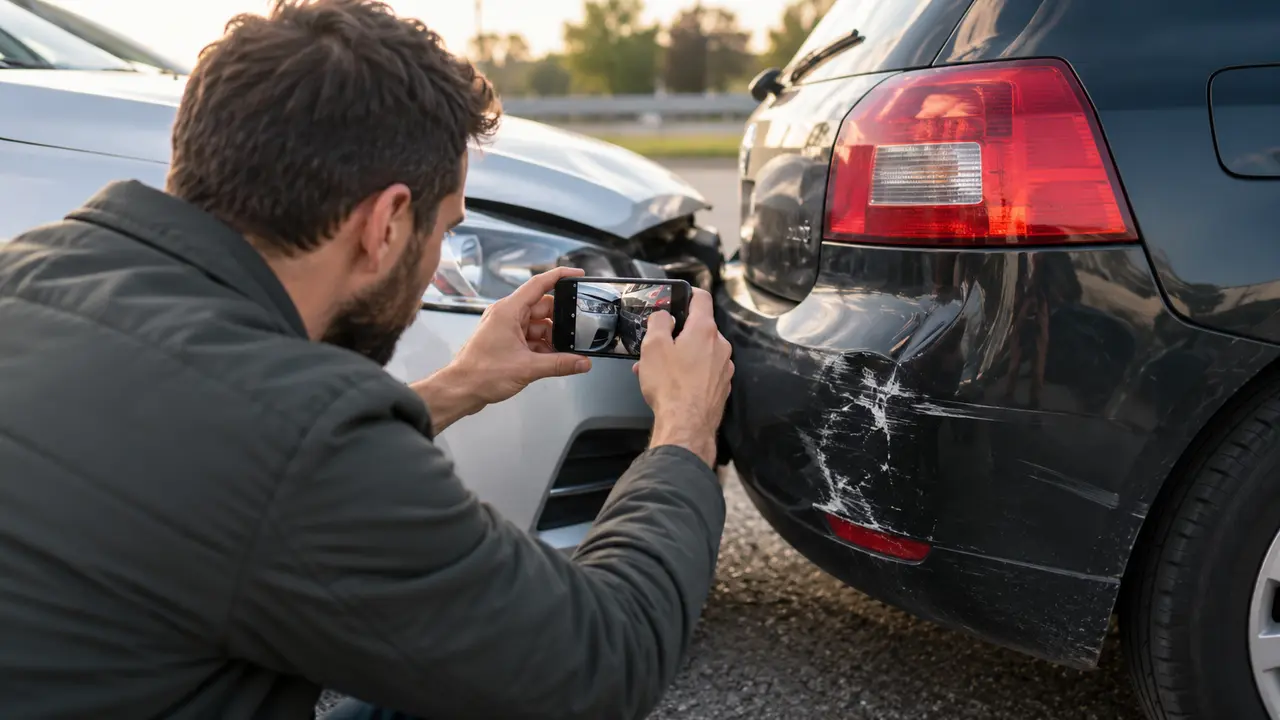
Take wide photos that show where the vehicles came to rest, road markings, traffic signs, weather, and visible damage, if you can do so safely. Take close photos of each damaged area and the licence plates. Note the time, date, location, direction of travel, and what happened in simple words. Ask witnesses whether they are willing to share contact information. Keep their details private and use them only for the claim or lawful report.
Photos are useful, but they do not replace an official report where one is required. Save dashcam footage before the device overwrites it. Keep copies of towing receipts, medical notes, repair estimates, and messages from the other party. Do not edit evidence in a way that changes what it appears to show. If you crop a photo for clarity, retain the original too. A clear timeline can save hours of confusion later.
Notify the insurer through an official channel
Use the number on the policy, insurer’s official app, or official website. A caller who claims to be an insurance agent may not be genuine. Do not share one-time codes or bank passwords with a stranger. Tell the insurer the basic facts and ask about the claim reference, deadlines, inspection, approved repairers, and whether you can move the vehicle. Coverage and reporting rules differ across contracts and countries, so your own policy controls the details.
The National Association of Insurance Commissioners advises motorists to put safety first, gather information, and understand the claims process. Its guidance is written for the United States, but the core habits are broadly useful. Check local requirements before assuming a US deadline or process applies where you live.
Use a clear first report
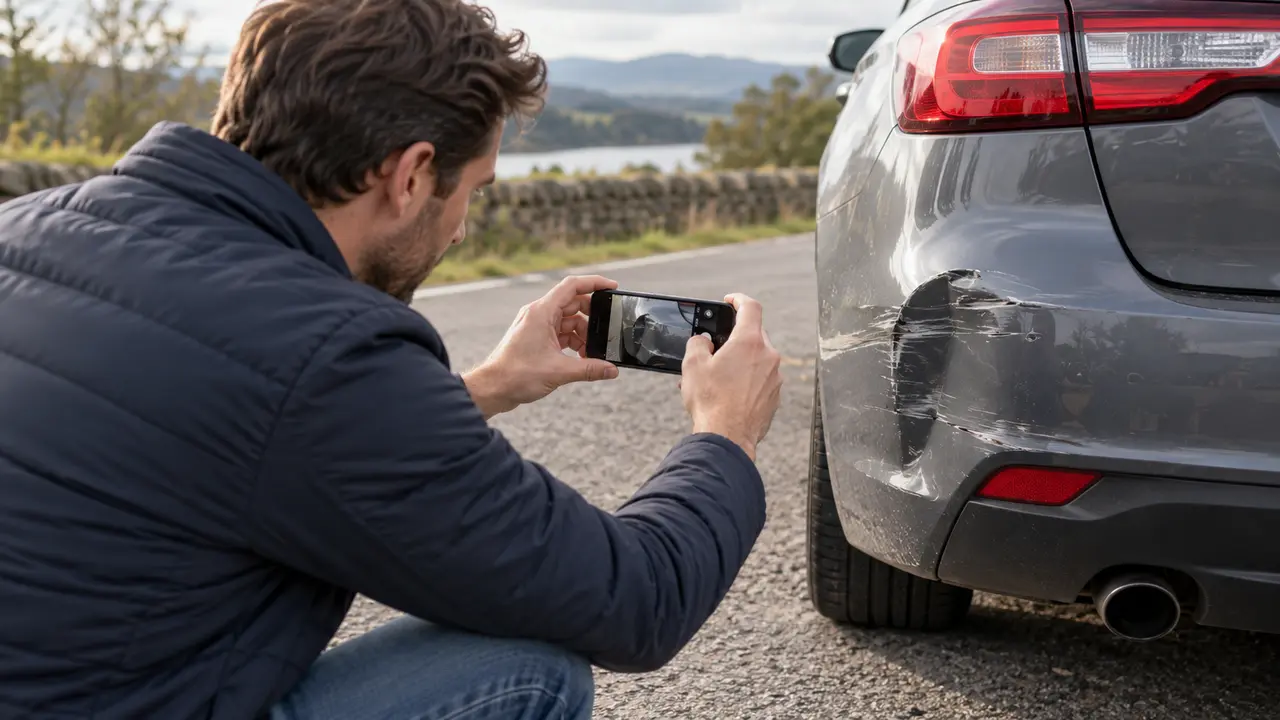
A helpful report might say: ‘At about 08:20, I was stopped at a junction when another vehicle contacted the rear of my car. No one reported an injury at the scene. I took photos and exchanged details. The rear bumper is damaged, and I have not authorised repairs.’ That gives the insurer facts without guessing about hidden damage or legal fault. Adjust the wording to what you know is true.
Understand what your policy may cover
A policy can include third-party liability, collision or own-damage cover, comprehensive cover for certain non-collision events, medical benefits, roadside help, rental transport, or other additions. Names and exclusions vary worldwide. Read the schedule, limits, deductible or excess, and endorsements. A repair may fall under your policy, another driver’s insurer, or both depending on fault rules. Do not assume every dent is covered merely because the policy is called comprehensive.
Some claims are below the deductible, meaning the insurer may pay little or nothing. Other claims may affect a no-claims benefit or future premium. Ask for an estimate before deciding whether to submit a small optional damage claim where the policy permits that choice. Never hide a reportable incident to protect a discount when local law or your contract requires disclosure. A short call to your insurer can clarify obligations.

Get the damage assessed properly
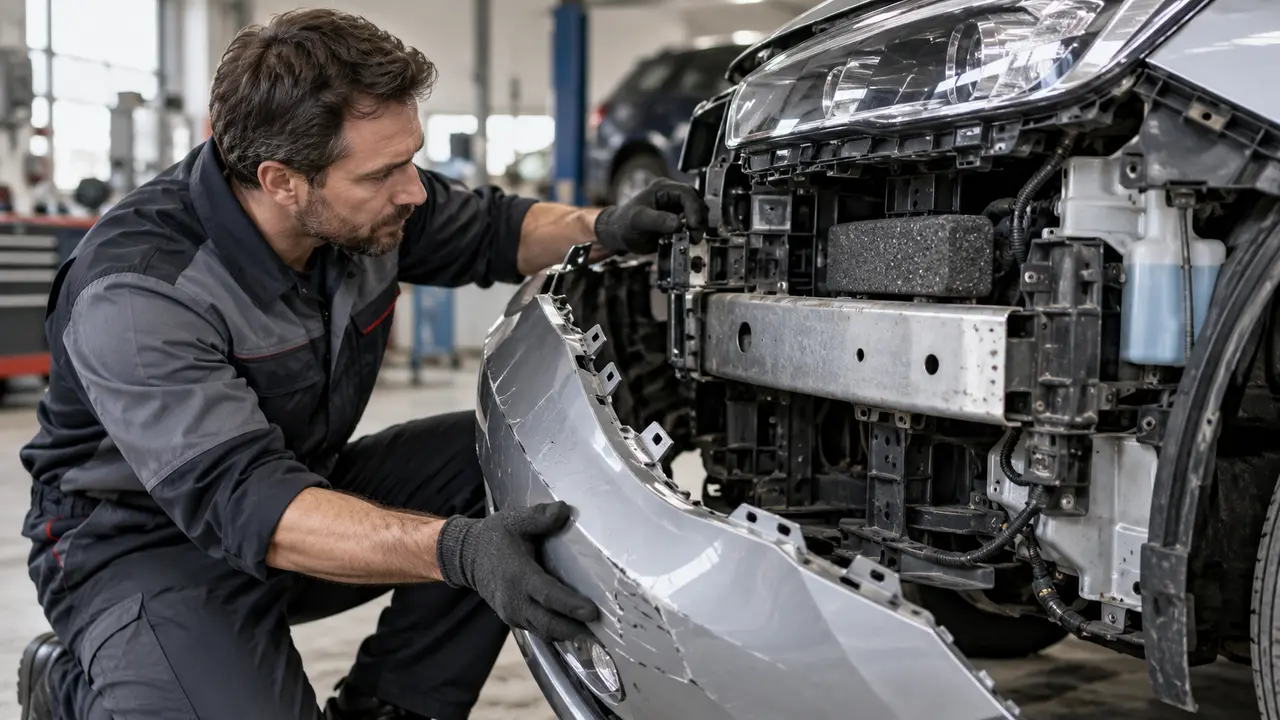
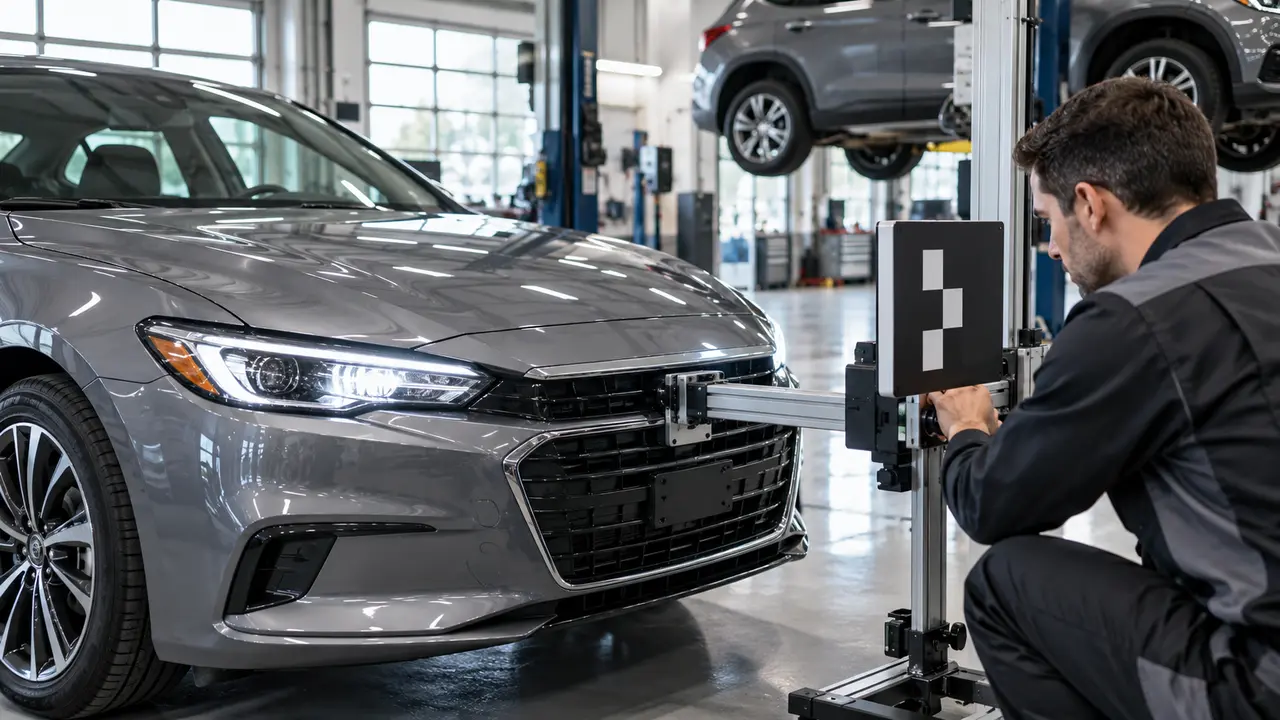
A bumper scuff can hide broken mounting points, sensors, wiring, or structural damage. Modern cars may need camera or radar calibration after certain repairs. Ask whether the repair estimate includes scanning, alignment, calibration, and safe replacement procedures when relevant. A low quote that skips required safety work is not a bargain. Our ADAS calibration guide explains why some repairs need extra checks.
Do not authorise major repairs before understanding the insurer’s inspection process. Some policies use approved networks or direct payment to workshops; others reimburse you after you pay. Ask who orders parts, who pays the repairer, whether original or equivalent parts are covered, and what happens if hidden damage appears after work starts. Keep the estimate and any revised approval in writing.
Track the claim like a small project
Create one folder for the reference number, policy, photos, report, estimates, receipts, and messages. Note every call with the date and the name or role of the person you spoke to. If the insurer asks for an item, record when you sent it. This is not about making the process hostile. It helps both sides see what is missing. It can also prevent repeating the whole story each time you contact a new handler.
Ask for a realistic next step rather than a vague promise. For example: ‘Has the inspection been assigned, and when should I expect an update?’ If you need a temporary car, confirm whether the policy pays for one, the daily limit, and how long the benefit lasts. Do not rent an expensive vehicle based on an assumption. Keep receipts for necessary transport where they may be recoverable.
A short claims checklist
- Make the scene safe and seek medical help where needed.
- Record photos, time, location and witness details safely.
- Use official insurer contact details and get a claim number.
- Ask about inspection, deductible, repairer and deadlines.
- Save every estimate, approval, invoice and final settlement.
What if the car is written off?
When repair cost or safety issues make a vehicle uneconomic to repair under applicable rules, an insurer may classify it as a total loss. Ask how the value is calculated, which comparable vehicles were used, what deductions apply, and whether taxes or fees are included. A settlement amount may not equal the balance of your loan. That is why loan-related protection such as GAP cover can matter in some markets. Read our EV insurance and GAP guide for the distinction.
If you disagree with the valuation, gather local listings for truly comparable vehicles: same model, trim, age, mileage, condition, and region. Provide service or upgrade receipts where relevant. Ask the insurer about its review or dispute process. Do not use an unusually high advertised price as proof of normal market value. A fair comparison is more persuasive than an emotional objection.
Handle disputes with evidence
A claim may be delayed because a report is missing, liability is disputed, or the insurer wants more evidence. Ask for a written explanation of what is needed. If a claim is denied, request the policy clause and the factual reason. Compare that with your records. A local insurance regulator, ombudsman, consumer agency, or legal adviser may help, but complaint routes vary by country. The California Department of Insurance publishes an example of clear consumer guidance on claims, though its rules are not global.
Do not sign a final settlement or release without reading what rights you give up. Ask questions about repairs that are still being inspected, injury claims, deductibles, and the treatment of salvage. Keep copies of signed documents. If you do not understand a legal form, get qualified local advice before accepting it.
Check the repair before the case closes
When you collect the car, inspect paint, panel gaps, lights, warning messages, cameras, sensors, tyres, and the areas that were repaired. Ask for invoices and any required calibration or alignment report. Test the car in a safe place. Report a problem promptly through the shop and insurer’s documented process. Some defects appear only after a few days, so keep the file rather than deleting it immediately after payment.
Most importantly, do not let the claims process distract from medical care or safety. A sore neck or other symptom should be assessed by a qualified health professional. Insurance forms are important, but they are not a substitute for diagnosis. Follow local reporting rules and seek advice appropriate to your situation.
A calmer claim starts with a clear record
The steps are simple even when the case is not: protect people, record facts, contact the right insurer, understand the cover, approve repairs carefully, and keep documents. No guide can predict every country’s rules or every policy’s wording. A written timeline and patient questions give you the best chance of resolving the practical problem without adding avoidable confusion.






One Comment