
Rental Car Insurance Abroad in 2026: What Cover Do You Really Need?
Do not buy rental cover before checking what you already have
The rental desk may ask you to choose insurance in just a few minutes. Some options can protect you from a costly claim, while others may repeat cover you already hold. The right answer depends on your own car policy, payment card benefits, the rental contract, the country, and the vehicle. A policy that works at home may not follow you across a border. Check before travel rather than trying to read several contracts while a queue forms behind you.
Start with the rental firm’s terms and your existing insurer. Ask what damage cover is already included in the price, what deductible or excess applies, and which events are excluded. Then contact your own insurer and card provider through official channels. A verbal assurance from a booking agent is not a substitute for written terms. Save the documents on your phone so you can refer to them when collecting the car.
Know the different types of rental protection
Rental desks use several names. Collision damage waiver or loss damage waiver may limit what the rental company charges for certain vehicle damage or theft. It may be a contractual waiver rather than a traditional insurance policy. Third-party liability cover concerns harm or damage to others. Personal accident, belongings cover, roadside assistance, and reduced excess products address different risks. Names and legal requirements vary by country.
Do not assume that a collision waiver covers every part of the vehicle. Tyres, glass, roof, underbody, keys, interior damage, and driving on certain roads may have special rules. The rental company may also charge administrative fees, towing, or loss of use where the contract permits it. Read the exclusions and the excess amount. If you are not comfortable carrying that amount, compare the available reduction options.
A simple excess example
Imagine your rental includes a 1,200-unit excess for a covered damage event. An optional product reduces that amount to 200 units for a daily fee. The decision is not just the daily price; it is how much risk you can afford and exactly which claims the reduction covers. Some third-party reimbursement products require you to pay the rental firm first, then submit documents to recover eligible costs. That is different from having the excess reduced at the desk.
Your personal car policy may have limits
Some personal car insurance policies extend aspects of coverage to rental cars, often with limits on country, rental duration, vehicle type, and use. Others do not. Do not assume cover travels with you. Ask your insurer whether collision, liability, theft, and roadside help apply to the exact destination and rental class. Check whether a claim affects your own deductible or renewal. Request written confirmation or a clear policy clause.
The National Association of Insurance Commissioners tells US consumers to check existing policies and credit card benefits before purchasing rental company options. That advice is useful as a checklist, not a universal statement that US insurance applies abroad. Local law and contract wording determine the real answer.
Card benefits need close reading
Some payment cards offer rental vehicle damage cover if you pay for the booking with that card and meet other conditions. Benefits may be primary or secondary, and many cards exclude certain countries, expensive vehicles, long rentals, or commercial use. You may need to decline the rental company’s collision waiver to activate a card benefit. Never do so until you have read the current benefit guide and know what happens if you must pay the rental company before reimbursement.
Call the card issuer’s benefit administrator, not just a general bank support line. Ask for eligibility, vehicle restrictions, excluded damage, claim deadlines, and documents needed. Keep the card payment receipt and contract. If coverage is not confirmed, do not build the whole trip around a benefit you hope exists.

Liability cover may be the bigger risk
Damage to the rental car is only one kind of loss. An accident may injure another person or damage their property. Check the liability limit included by law or the rental price, and whether additional cover is available and appropriate. Limits vary widely. A minimum required amount may not be enough for a severe event. If you are unsure, seek advice from a regulated local insurance professional before driving.
Also check whether all drivers are named on the contract. An unlisted friend taking the wheel can create a coverage dispute. Age restrictions, licence requirements, cross-border permissions, and off-road use can matter. Keep the rental agreement in the vehicle or in the form required locally. Do not assume a spouse or family member can drive without being registered.
International rentals have extra questions
Before crossing a border, ask whether the rental firm permits it and whether cover remains valid. Some regions require special documents or fees. Ferries, islands, mountain roads, and remote areas may have their own restrictions. A vehicle hired in one country may not be allowed in another. The safest plan is to disclose your route and obtain written permission where needed.
Check whether your driving licence is recognised and whether an international driving permit is required. That is a legal issue separate from insurance. Use official transport or government guidance for your destinations. A rental company’s acceptance of your booking does not prove that every licence rule is satisfied. You should also know how to contact emergency services and the rental company’s roadside provider locally.
Before collecting the keys
- Confirm the permitted countries and named drivers.
- Read the damage excess and excluded vehicle parts.
- Check personal insurance and card benefits in writing.
- Know the fuel or charging policy and return rules.
- Save emergency, breakdown and claims contact details.

Inspect and record the vehicle at pickup
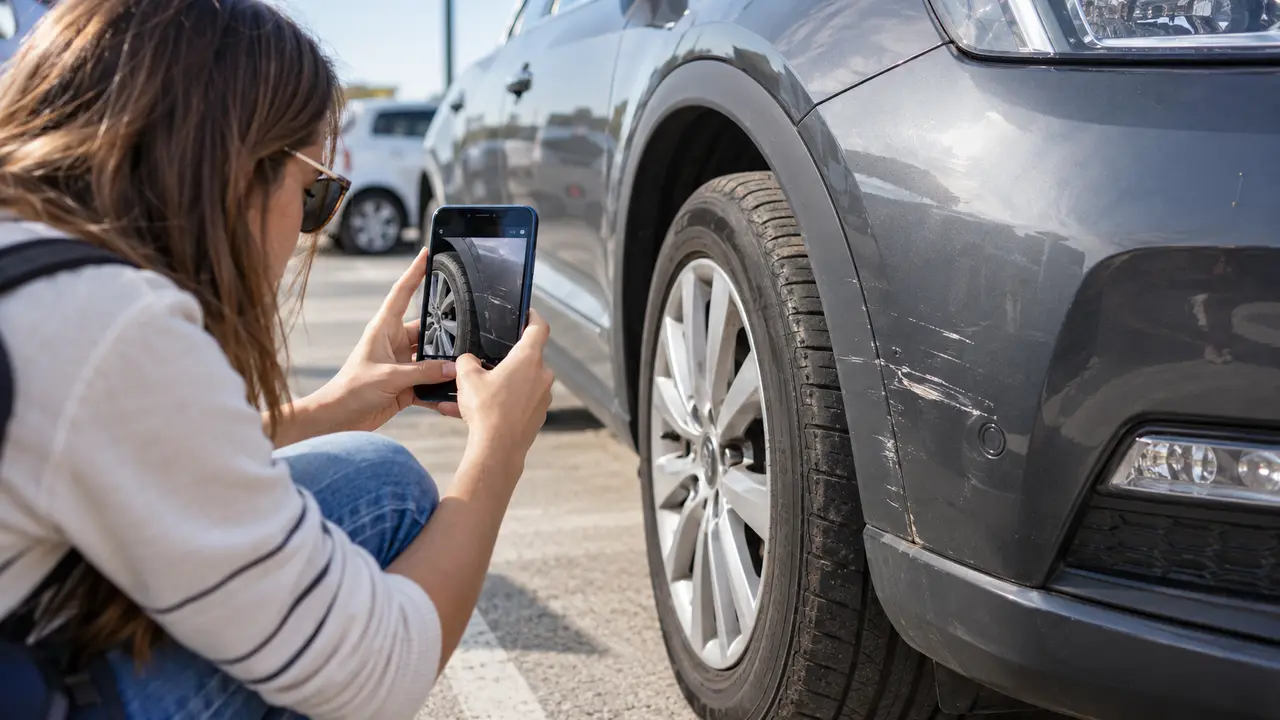
Walk around the car in good light. Photograph existing marks, wheels, glass, roof where visible, seats, dashboard warning lights, and the fuel or charge level. Ask staff to record damage not shown on the agreement. If the car is collected at night, use the available light and report anything you find as soon as permitted by the contract. Keep your own photos with timestamps.
Check the tyres, wipers, lights, required safety equipment, and whether the car’s controls are familiar. A quick inspection can prevent a dispute about a scratch and reveal a safety issue before you leave. If a warning light is on or a tyre appears damaged, request a replacement or documented repair. Do not accept an unsafe car merely because you have already paid.
Know what to do after damage or theft
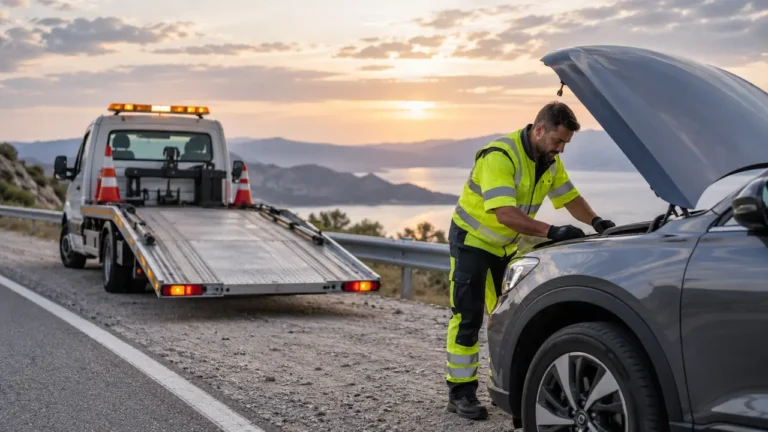
Put safety first. Follow local emergency reporting rules and the rental firm’s instructions. Contact the rental company promptly, and inform the insurer or card benefit provider within their required timeframe. Take photos if safe, obtain official reports where required, and keep witness details. Do not arrange major repairs yourself unless the contract or provider authorises it. An unauthorised repair can complicate a claim.
The State Farm rental insurance guide explains the importance of checking what your personal policy covers and what the rental contract adds. Terms change by policy and location. Use it for questions to ask, not as proof that any specific rental is insured.

Return the car with evidence
Refuel or charge according to the agreement and leave enough time for any queue. Photograph the vehicle from the same angles you used at pickup, including the dashboard level and mileage. If staff inspect the car, ask for a copy of the return record. If the desk is closed, follow the key-drop rules and take photos of the parking position and time. Keep receipts until the deposit is released and the final charge is settled.
A charge that appears after return may be legitimate or mistaken. Ask for the damage report, dated photos, invoice, and relevant contract clause. Compare it with your pickup and return records. Use the rental company’s dispute route, then your card issuer or local consumer regulator when appropriate. Avoid posting another person’s personal details publicly while disputing the charge.
Choose the protection you understand
A traveller with strong confirmed personal cover and card benefits may need fewer extras. Someone renting abroad with no applicable cover may value the rental firm’s protection more. A large excess can still matter even when the damage risk feels low. The best choice is the one that gives you a clear maximum exposure and a claims process you can follow.
Compare the total cost of the rental with each protection option. Do not choose solely on a low booking price and discover a large unavoidable excess at the desk. Read the terms before you travel, name every driver, inspect the car, and save evidence. Those steps are useful almost anywhere in the world.
An example of a practical choice
A family rents a compact car for ten days in a country they have never driven in. Their home policy does not extend to that country. Their payment card covers some vehicle damage but not third-party liability. They check the rental company’s basic liability limit, the damage excess, the card exclusions, and the cost of excess reduction. Only then do they decide what to buy. That is far safer than accepting or refusing everything in a hurry.
For a separate guide to filing a claim after an accident, see our car insurance claims checklist. Keep your documents together before leaving home. The time spent checking them can save serious confusion at the counter.





One Comment