EV Charging in Apartments in 2026: Shared Parking, Costs and Permissions
Start with the parking space, not the charger catalogue
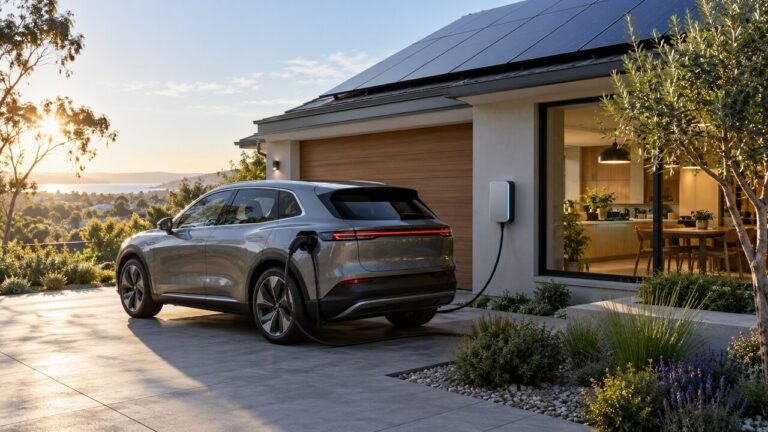
Charging an electric car in an apartment or shared building can be simple once the right people agree on a safe plan. Yet the first step is not buying a wallbox. It is finding out who controls the parking bay, electrical supply, and building work. You may own the flat but rent the parking space. You may have an assigned bay without a nearby meter. Each arrangement changes the cost and approval path.
Ask the building manager or owners’ association what rules already exist. Some developments have shared charging points. Others allow residents to install a dedicated unit with permission. A few have no safe electrical route yet. Keep the first discussion practical: where the car parks, how often you drive, what charging speed you need, and who will pay for energy and maintenance. This makes the request easier to assess.
Write down your daily energy need
Suppose your car uses 17 kWh per 100 km and you drive 40 km on a normal day. You need about 6.8 kWh at the battery, plus charging losses. A modest overnight AC charging connection may replace that energy with ease. You may not need the highest-power charger on sale. Check the car’s onboard AC limit, the time it stays parked, and the building’s available capacity before deciding on equipment.
Understand private and shared charging
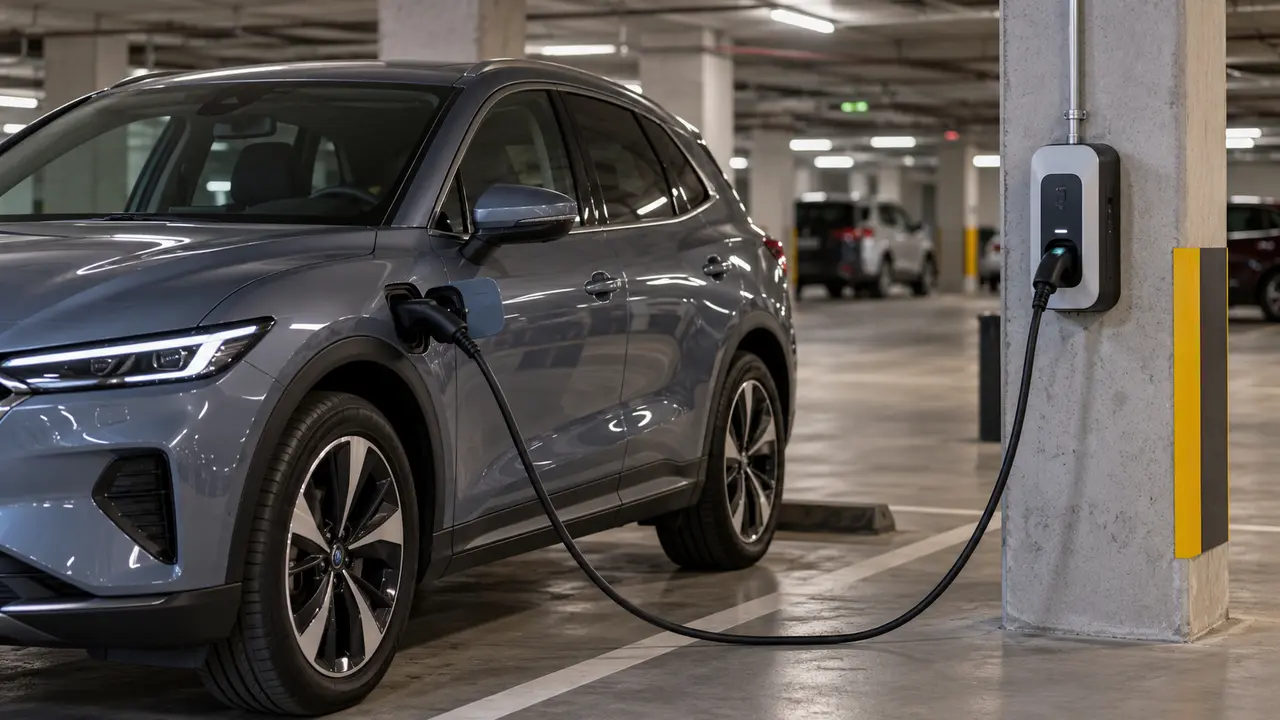
A private charger serves one assigned bay and may connect to your own meter or a separate managed meter. It can be convenient, but cable routing through common areas may be expensive. A shared system serves several bays, often with access control and billing software. It may cost less per resident when the building plans it well, but you need rules about booking, parking after charging, and maintenance.
The International Energy Agency reports that access to residential charging differs sharply by housing type. Its 2026 outlook cites a 2025 survey in China where around half of EV owners had home chargers, while about a third had access to shared residential charging. Those figures describe one market, not every country. They show why shared systems deserve attention.

Make the electricity bill fair
A building needs a reliable way to measure who used the electricity. A dedicated circuit connected to an apartment meter may be straightforward where regulations allow it. In other buildings, a smart meter or charging management platform records each session and bills the user. Ask whether the fee includes only electricity or also a service charge, network fee, parking fee, or tax. A cheap installation can become costly if billing is unclear.
For example, three residents may share a charger. One drives daily while another charges only twice a month. A flat monthly fee may seem unfair unless it covers a basic service cost and electricity is charged by measured use. Ask for a written policy with prices, meter accuracy, access rules, and how disputes are handled. Check local consumer and electricity rules before assuming a particular billing method is permitted.
Questions for the building manager
- Who owns or controls the parking bay and cable route?
- Can a qualified electrician assess the electrical capacity?
- Will energy be billed by a meter or shared service?
- Who maintains the charger and handles faults?
- What happens if the resident moves or the parking allocation changes?
Check electrical capacity and load management
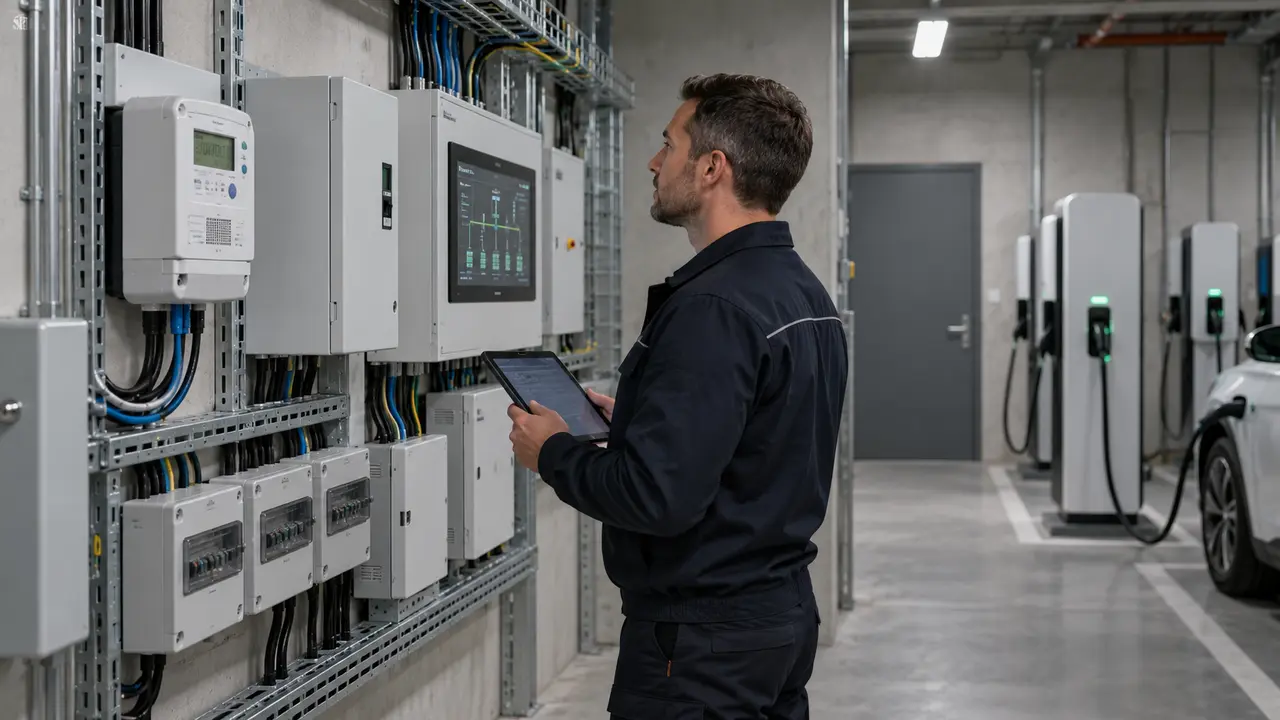
A shared building may have enough power for a few vehicles but not for many cars charging at full speed at once. A qualified electrical designer should review the main supply, distribution boards, cable routes, protection devices, fire rules, and future demand. Dynamic load management can spread available capacity across several chargers. It can slow charging when building demand is high and increase it when more power is free.
Do not treat load management as permission to overload old wiring. It must be designed and installed correctly. Ask for a capacity plan that considers future residents, not just the first car. Conduit and space for later chargers may be cheaper to include during initial work than to retrofit each bay in separate projects. A building can start small while planning for growth.

Get permission in writing
Rules differ by city, country, lease, and property type. Some jurisdictions have rights-to-charge laws. Others need landlord, association, utility, or local authority approval. Do not assume that owning an apartment gives you the right to drill through a common wall or use a shared circuit. Submit a clear proposal with a licensed installer, equipment details, wiring plan, insurance information, and responsibility for future repairs.
If the first answer is no, ask which concern drives it. Cost, fire safety, access, aesthetics, meter ownership, and fairness may each need a different solution. A shared pilot programme or a lower-power system may address the issue. Avoid installing an extension cable through a corridor or from a domestic socket without approval. That can create electrical and trip hazards.
Choose equipment for the setting
Look for a charger certified for the local market, suitable for indoor or outdoor placement, and compatible with the vehicle. In a shared garage, access control can stop unauthorised use. A display or app may help residents see session costs, but it should not be the only way to get support. Ask about spare parts, warranty length, software updates, and who can service it locally. A product with no local support can become a dead box after one fault.
Cable management matters. A lead should not cross a walkway, emergency route, or another parking space. Ask the installer about physical protection from vehicle impacts, water exposure, and ventilation. Fire safety requirements vary, and the building’s fire professional or authority may need to review the design. Keep the emergency shutoff and operating instructions clear for trained staff.
Plan for visitors, renters and accessible parking
Not every resident owns the same bay for life. A building may need flexible charging access for renters, visitors, or people with mobility needs. A first-come system can work in a small block, but larger sites may need booking, fair-use rules, and accessible cable placement. Check whether users can start a charge without a smartphone and how they receive help. A charging system should not become a barrier to people who cannot use one particular app.
When a resident moves out, the building needs a process for transferring the account, removing private equipment, or leaving it for the next user. Put that in writing before installation. Otherwise, the next occupant may inherit a locked charger or an unclear electricity bill.
What if home installation is not possible?
You can still run an EV without a private charger if reliable public or workplace charging fits your routine. Map stations near the places where the car naturally stays parked. Compare the total time and energy price, not just the advertised charger speed. A slower charger near work may be easier than weekly trips to a fast charger across town. Check access hours and payment methods, and keep a backup.
A temporary workaround should not become a safety risk. Do not trail cables through open windows, communal hallways, or across public paths. Portable equipment still needs a suitable circuit and local approval. If regular charging remains too inconvenient or costly, it may be sensible to delay an EV purchase until the building has a workable plan.
A realistic apartment charging example
Imagine a 40-flat building with ten interested EV owners. Instead of installing ten unrelated high-power chargers, the association commissions a load study. It fits a managed supply for four shared bays, with metered billing and room to expand. Residents charge overnight based on booking rules. The building monitors use for six months, then decides whether more bays are needed. That staged approach can be safer and fairer than guessing at future demand.

Keep the project simple and accountable
The best proposal answers five questions: where the car will charge, who approves the work, how safe capacity is confirmed, how users pay, and who fixes faults. Compare at least two qualified installation quotes where possible. Keep contracts, certificates, warranties, and billing rules. Review the system as more residents adopt EVs.
An apartment charger is shared infrastructure, even when one driver uses it first. A good design respects the building, future users, and local law. Begin with real driving needs and written permission. The rest becomes an engineering and billing problem that professionals can solve. For charging options beyond home, see our public charging and route planning guide.
What to take to the first meeting
Bring a short note, not a sales brochure. Include your weekly distance, expected charging hours, bay location, a sketch of the route to an electrical room if known, and the name of a qualified local installer willing to assess the site. Ask the manager what documents and approvals are needed. Leave the meeting with a named contact and next step. That is more useful than a debate about which charger brand is best.
If other residents are interested, gather their needs as well. One person may need daily overnight charging; another may need only a weekly top-up. Grouping demand can justify a shared scheme and avoid several rounds of disruptive electrical work. Keep personal driving data private unless residents choose to share it.
Look beyond the first installation bill
Compare ongoing network fees, payment processing, inspections, repairs, electricity tariffs, software support, and equipment replacement. Ask who pays if a charger breaks because of misuse and whether the building holds a reserve for future upgrades. A low installation price can be poor value if the system requires expensive subscriptions or has no local service provider.
Set a review date after the first months of operation. Check faults, user wait times, energy bills, and unused capacity. A system that is too slow at busy times may need new scheduling rules, not necessarily more power. One that often sits idle may not need immediate expansion. Real use data helps the building spend carefully.