EV Battery Recycling and Second Life in 2026: What Happens to Old Packs?
An EV battery does not become waste the day it leaves a car
Electric vehicle batteries can serve for many years, but every pack will one day leave its first vehicle. Some may still hold enough energy for a less demanding task. Others need to be taken apart and recycled so useful materials can enter new products. The right route depends on condition, chemistry, safety, local law, and cost. A consumer cannot decide by looking at a battery case, and a headline about recycling does not prove that every pack is being handled well.
Start with a simple distinction. Repair keeps a battery in the vehicle. Reuse puts a suitable module or pack into another vehicle or application after checks. Second life usually means using it for stationary storage or another less demanding job. Recycling breaks down battery material to recover metals or other components. These are different processes with different risks, warranties, and environmental results.
Why battery health comes before any second-life plan
A battery management system tracks voltage, temperature, and other data, but a safe assessment often needs more tests. A pack may have enough capacity and still contain a damaged module, a cooling fault, or an unsafe history. Professionals need to know how it was used, whether it was in a crash or flood, and what its cells can still do. Do not buy a loose EV module for home storage based only on a claimed state-of-health percentage.
For a used EV buyer, battery health records matter more than speculation about eventual scrap value. Ask about warranty, charging history, diagnostic reports, and past repairs. Our used EV battery health guide</a covers the purchase checks. A battery that still works well in a car may be more valuable staying there than being removed early for a second use.
What a professional assessment considers
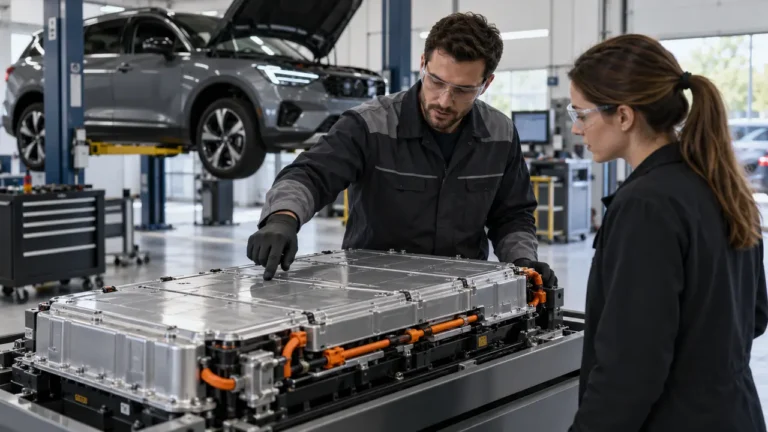
Technicians look at usable capacity, cell balance, internal resistance, temperature behaviour, insulation, physical damage, and system compatibility. The testing method depends on pack design. A simple dashboard range reading is not enough. A second-life project also needs a compatible battery control system, enclosure, cooling, fire protection, and monitoring. An old pack cannot be treated like a giant household power bank.

What recycling can recover
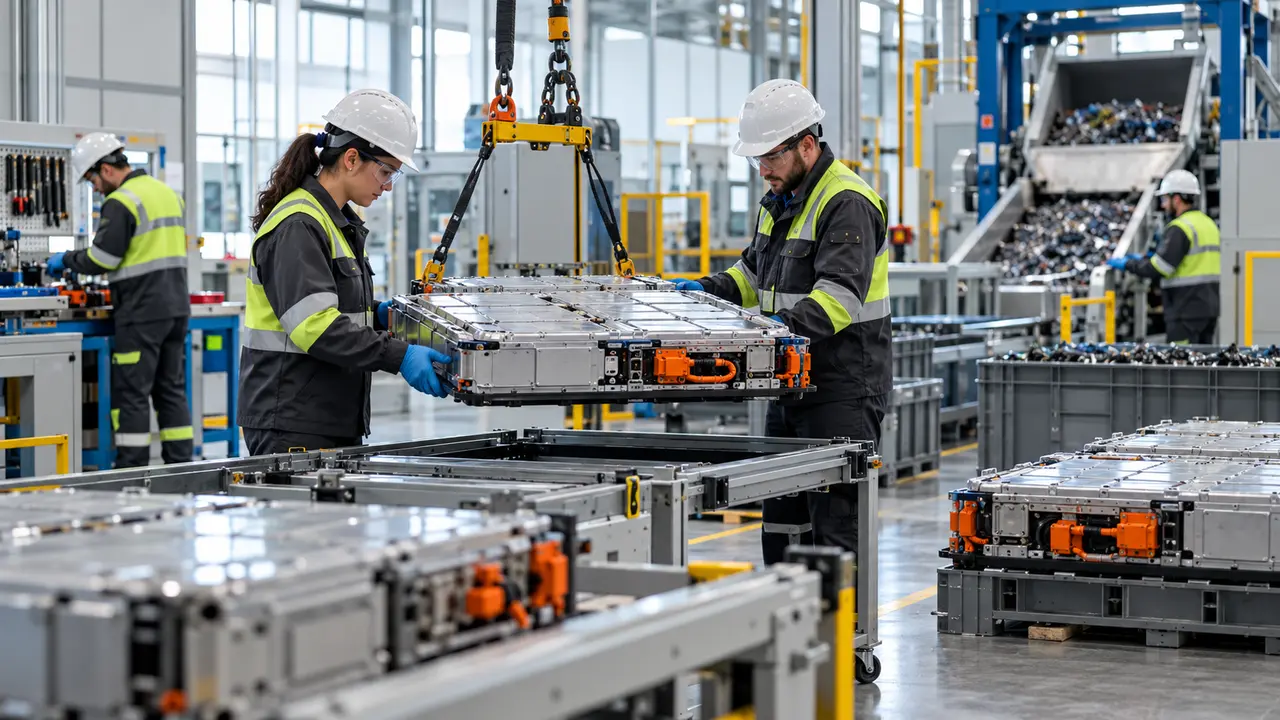
Lithium-ion batteries contain materials that may include lithium, nickel, cobalt, manganese, iron, copper, aluminium, graphite, and others. The exact mix depends on chemistry. Some processes first shred or dismantle packs and produce a concentrated material often called black mass. Later steps may use water-based chemistry or high-temperature methods to recover valuable elements. Each method has energy, cost, and waste trade-offs.
The International Energy Agency reports that China hosts more than 85% of global battery recycling capacity in its 2026 outlook. This is a measure of capacity, not proof that every retired battery is collected or recycled. It also shows why supply chains and regulations differ by region. Collection, transport, processing, and markets for recovered material all need to work together.
Battery chemistry changes the economics
Nickel-rich batteries may contain metals with relatively high recovery value. Lithium iron phosphate packs have a different mix and often less value in nickel or cobalt because they do not contain those elements in the cathode. That does not make LFP packs worthless or impossible to recycle. It means process design and collection costs matter more. A recycler must still recover useful material safely and meet local environmental rules.
Do not assume that one recycling rate applies to every chemistry or process. A company may report high recovery for one element while other materials are not captured at the same level. Ask what percentage means: collection rate, mass recovery, material purity, or actual use in a new battery. Those figures answer different questions. Without a clear definition, even an impressive number can mislead.

Second-life storage is possible, but not automatic
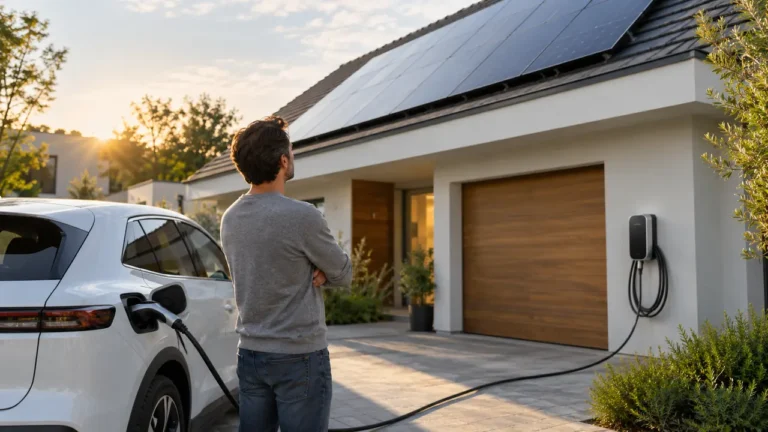
A retired EV pack might be used for a stationary battery system where weight and space matter less than in a car. It could store solar power or support a commercial site. Yet every system needs engineering, safe battery controls, a suitable inverter, electrical protection, and a plan for faults. A used pack may have uneven ageing across modules. That can make integration and long-term service harder than using new purpose-built storage cells.
Imagine a small factory considering a second-life battery to reduce peak electricity demand. The pack’s low purchase price looks attractive. Then the owner adds testing, housing, thermal management, controls, certification, transport, installation, insurance, and eventual recycling. The comparison may change. A project can make sense, but the decision must include the complete system cost rather than the price of the retired pack.
Five questions for a second-life project
- Who tested the battery and what data is available?
- What safety standard and local approval cover the installation?
- Who provides control software and fault monitoring?
- What warranty and service support are offered?
- Who collects and recycles the pack at its final end of life?
Why repairability matters earlier in the battery’s life
A pack designed for repair may allow a trained workshop to replace a faulty module or component rather than the entire assembly. But not every design permits that. Some packs use structural adhesives, integrated cooling, or software controls that make repair complex. Owners should not open a high-voltage pack. The safe question is whether the manufacturer or approved repair network has a documented repair path and genuine parts.
Repair can extend useful life and reduce the need for new material, but only if the repaired pack meets safety and performance requirements. A cheap, unverified cell replacement can create more risk than value. Ask for written warranty terms after repair, diagnostic results, and whether the car’s safety systems were rechecked. The goal is dependable service, not a repair at any price.

Collection and transport are part of the problem
A damaged or retired battery cannot be shipped like ordinary household waste. High-voltage packs can pose fire and electrical risks, and transport rules vary by country and battery condition. Insurers, dismantlers, workshops, and recyclers need clear procedures. Do not leave a damaged pack in a garden, put cells in general rubbish, or send one through normal parcel post. Contact an authorised vehicle service centre or licensed collection service.
Flood-damaged or severely crashed EVs need special care. A battery can hold energy even if the vehicle will not start. Follow emergency services and manufacturer guidance. Do not touch exposed high-voltage parts or attempt to disconnect a pack yourself. The same caution applies to home storage systems built with reused batteries. Safe collection is the first step toward useful recycling.
What policy and producer responsibility can change
Some markets are introducing battery traceability, recycled-content rules, collection targets, or producer responsibility. These are not identical worldwide and may change. A buyer should not assume that a battery passport, recycling label, or take-back right from one jurisdiction applies in another. Ask the vehicle brand and local regulator what collection and warranty paths exist for the exact model in your country.
The IEA’s Battery Circularity work looks at innovation and systems that can keep materials in use. These reports help explain industry trends, but a consumer still needs a local licensed service provider. A global promise means little if there is no safe collection route near the owner.

How a vehicle owner can act today
Keep the battery under the conditions recommended in the owner’s manual. Follow charging guidance, repair damage promptly, and keep service records. If a battery fault appears, use a qualified repair network instead of an informal pack seller. Before selling the vehicle, provide accurate health and warranty information. If the battery is retired, ask the brand or authorised recycler for a documented handover and receipt.
Do not pay extra for a car solely because a salesperson promises that its battery will have high resale value as stationary storage years later. Future technology, rules, chemistry prices, and testing cost may all change. Compare the car for the use you need now. Future recycling is important, but it should not become an unsupported financial promise.
Separating real progress from green claims
A credible recycling claim should identify the facility, process, material recovered, and measurement method. It should distinguish pilot projects from commercial operations. Ask whether the company is processing production scrap, used consumer packs, or both. Production scrap is cleaner and easier to collect, so strong results there do not prove the same performance for old, mixed, damaged batteries.
Beware of broad claims such as infinitely recyclable or zero-impact. Recovering material still takes energy and creates transport and processing impacts. The useful comparison is whether a process reduces demand for virgin material and manages waste responsibly across the full chain. Independent reporting and clear data carry more weight than a marketing slogan.
A practical end-of-life checklist
When an EV pack needs replacement, ask the workshop for a written diagnosis and options for repair, replacement, reuse, or recycling. Confirm who owns the old pack after a warranty claim. Keep the transfer record and follow local hazardous-waste rules. If the car is written off, inform the insurer and salvage handler that it has a high-voltage battery. Do not try to sell damaged modules to an unverified buyer.
EV battery recycling and second life will matter more as older electric cars leave the road. The strongest solution is not one dramatic technology. It is longer safe use, repair where practical, professional testing, sound collection, and responsible recovery. That approach protects owners and makes battery materials more useful over time.