Lease vs Buy vs Car Subscription in 2026: Compare the True Costs
The monthly payment hides the real choice
Buying and leasing can put you in the same car, but the contract behind the wheel is very different. When you buy, you own the vehicle or work toward owning it through a loan. When you lease, you normally pay for the right to use it for a set term and return it under agreed conditions. Some markets also offer subscriptions with insurance or service bundled. These products are not standard across countries, so begin by reading the actual agreement.
A lower lease payment does not mean the car costs less over time. You may pay a deposit, fees, insurance, maintenance, and charges at the end. A loan payment can be higher because it is helping you buy an asset, though interest and depreciation still cost money. The practical question is what you will spend for the period you need the vehicle and what you have when the contract ends.
Compare the same time period
Choose a clear horizon, such as three or five years. For buying, include the purchase price, finance interest, taxes, insurance, service, repairs, and expected sale value. For leasing, include upfront payment, all monthly payments, fees, insurance, maintenance not included, mileage penalties, and return conditions. A short-term subscription needs its own total cost including delivery, cancellation rules, excess mileage, and covered services.
Do not mix a two-year lease with a seven-year loan payment and decide from the monthly number. Use the same number of months and expected distance. If you would keep a bought car for eight years, a sequence of three-year leases may be much more costly than one ownership period. If you need a car only for one year, the reverse can happen depending on terms and resale risk.
A simple cost example
Imagine a car costs 30,000 currency units. A buyer pays 4,000 upfront, finances the rest, and expects to sell after three years. A leaser pays 3,000 upfront and a lower monthly sum, then returns the car. You cannot tell which is cheaper without interest, fees, the car’s value after three years, and lease return charges. Put every amount into a table. Make a low, middle, and high resale-value case for the buyer.

Mileage limits can change the answer
Many leases set an annual distance limit. Extra kilometres or miles may cost money at return. Drivers with long commutes, frequent road trips, or uncertain work travel should check this before signing. Some contracts allow a higher mileage allowance for a larger payment. Others charge a fixed rate for excess use. Read what happens if you drive much less than the allowance too. You may not receive a refund.
Buying gives you more freedom to drive, though higher mileage can reduce resale value and raise maintenance cost. If your life may change, this flexibility can matter more than a small difference in the first year’s payment. A job change, family move, or long-distance commute can make a once-suitable lease expensive. Ask how the contract handles early changes.
Wear and tear rules deserve attention
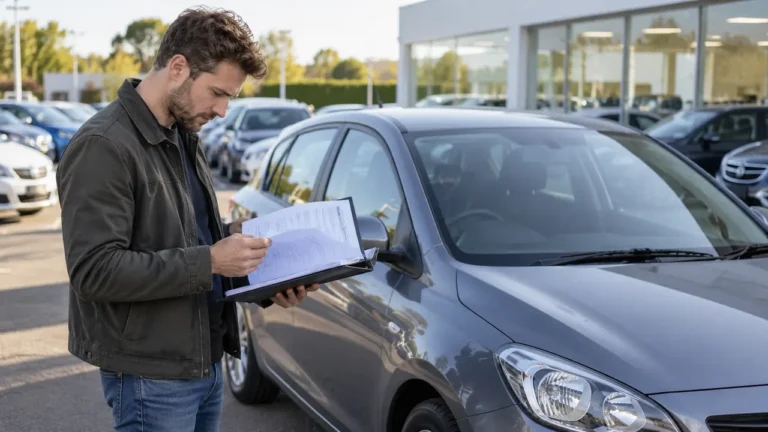
At lease return, the provider may inspect paint, wheels, glass, tyres, interior trim, and service records. Contracts usually allow some normal use but define chargeable damage differently. Ask for the wear guide before signing. Photograph the vehicle at delivery and return. Keep service receipts and report damage as the contract requires. Do not assume that ordinary insurance settles every lease-end fee.
If children, pets, narrow parking spaces, or heavy work gear are part of your routine, consider likely wear. That does not mean you should avoid leasing. It means you should choose a contract whose standards you understand and budget for possible charges. A buyer also pays for poor condition through lower resale value, but has more control over when and how to repair cosmetic damage.
Questions about early termination
Ask what happens if you lose your job, move abroad, need a different size car, or simply want to leave the contract early. An early exit can be costly. Some plans allow transfer to another person under conditions. Others require a large settlement. Check whether insurance for theft or total loss ends the lease without additional debt. Never rely on a salesperson’s verbal promise where the written terms say something else.

Ownership has risks and benefits
A purchased car can be sold, kept, modified within law and warranty limits, or passed to another driver. Once a loan is paid, you may have years without a finance payment. The trade-off is repair risk and uncertainty over resale value. An older car may cost more to maintain, while a new model can lose value quickly. Choose a repair reserve and use realistic resale estimates instead of assuming every car holds value.
The AAA car buying guidance explains the basic lease-versus-buy trade-off. Consumer Reports also discusses why a lower lease payment is not the same as lower long-run cost. Those sources focus largely on the US market. Contract rules, tax, and financing vary elsewhere.
Insurance and maintenance are not always included
Read what the provider covers. A lease may require comprehensive insurance at specified limits, and you may pay for routine service, tyres, and repairs. A subscription may bundle some of these costs, but often has a deductible or exclusions. Compare exactly what is in the price. If one option includes roadside assistance and another does not, add a realistic cost to make the comparison fair.
For an electric car, confirm who pays for charging, battery-related faults, and any required software or service visits. A lease does not automatically protect you from every battery concern. Check warranty terms, approved repair networks, and what happens after a total loss. If a lender or leasing company requires specific insurance, include that cost before agreeing to the payment.

Look carefully at the end of the contract
Some leases offer an option to buy the car for a stated residual value. Others require return. A subscription may allow you to change vehicles but can charge exit fees. Ask for the final payment, purchase option price, inspection process, and return location in writing. If you plan to buy at lease end, compare that path with financing the car from the start. The total may be quite different.
A good contract is one you can finish comfortably. Avoid a plan that depends on your future income rising or a bonus arriving on time. Budget for insurance renewal, tyres, and unexpected costs even when a monthly product appears all-inclusive. A payment that fits today may not fit if rent or household bills rise.
Your three-column comparison
- Total cash paid during the chosen period.
- Distance allowance and extra-mileage cost.
- Insurance, service and repair responsibility.
- Early termination and end-of-term fees.
- Asset or purchase option at the end.
When leasing can fit better
Leasing may suit someone who wants a newer vehicle for a fixed period, drives a predictable distance, and does not want to handle resale. It can also work when business or tax treatment is favourable under local law, but seek professional advice rather than assuming a deduction. A driver who changes cars often may value the convenience. The key is accepting mileage, condition, and contract limits.
Consider a professional who drives a steady 10,000 km a year and expects to move to a different city in three years. A clear lease with a suitable distance allowance may match that plan. Now imagine the same person takes a new role requiring 30,000 km a year. The economics can change sharply. Flexibility matters when your future driving is uncertain.

When buying can fit better
Buying often suits drivers who keep cars for many years, drive unpredictable distances, or want the freedom to sell when needed. A well-maintained used car may offer lower total cost than either a new lease or a new purchase, though repair risk must be assessed. Our used-car buying checklist helps with inspection and records.
If you finance, compare interest rate, total interest, loan term, fees, and prepayment conditions. A very long loan can make the monthly payment look small while increasing total cost. Our car loan APR guide explains how to compare offers. Do not borrow more than you can manage because a dealer shows a comfortable first payment.
A subscription is not a shortcut around the maths
Vehicle subscriptions can bundle a car, insurance, maintenance, and flexible changes. That convenience has a price. Check minimum term, cancellation notice, monthly distance, vehicle availability, deposits, damage fees, and geographic restrictions. A service that allows fast switching may be useful for a temporary assignment. It may be poor value for a driver who wants the same car for five years.
Make the provider specify what happens if the car is unavailable, needs repair, or you must travel across a border. Some subscriptions restrict drivers or countries. Read the insurance coverage carefully. A broad phrase such as everything included can still leave important costs outside the package.
Choose by your life, not the sales pitch
Set a realistic time horizon and distance. Compare total costs under the same assumptions. Read the limits and exit terms. Think about whether you want to own the car and how likely your circumstances are to change. Leasing, buying, and subscribing are tools for different needs. The best one is the contract you understand and can afford through the whole period.
Before signing, ask for a complete itemised quote and take time to read it away from the showroom. A transparent seller should let you compare without pressure. Your decision should still make sense when the attractive monthly number is removed from the page.