Used EV Battery Health in 2026: What to Check Before You Buy
Used EV Battery Health in 2026: What to Check Before You Buy
A used electric car can be a smart choice, but the battery creates a question that does not come up with a normal engine: how much useful capacity remains? A dashboard range estimate is not enough to answer it. Weather, recent driving and software can all change that number.
This guide shows how to check a used EV battery before paying a deposit. It covers battery reports, warranty terms, test drives, charging checks and price negotiation. The steps work as a starting point for buyers across the world, but warranties and consumer rights differ by country.
Why battery health matters when buying a used EV
An EV battery loses some usable capacity as it ages. That is normal. The amount of loss depends on the battery design, temperature, use and maintenance. Some packs age slowly; a damaged or faulty pack can behave very differently. You need evidence about the specific car, not an average claim about a brand.
The US Department of Energy’s Alternative Fuels Data Center notes that a traction battery can be costly to replace outside warranty. That does not mean most owners need replacements. It means a used buyer should check risk before setting a price.
Research also offers some perspective. A Department of Energy summary of an earlier study of about 15,000 plug-in vehicles reported battery replacements due to failure at 1.5% outside recalls; for model years 2016–2023 the rate was well below 1%. Those figures describe that study’s sample, not a guarantee for every vehicle in 2026.
The source is the Department of Energy’s battery replacement report. Use such data to put risk in context, then inspect the actual car.
First, understand what a battery health report measures
State of charge is not state of health
State of charge, or SoC, is the battery’s current level. Think of it like a fuel gauge. State of health, or SoH, is an estimate of the pack’s capacity or condition compared with a reference point. A car at 90% charge is not necessarily a car with 90% battery health.
SoH figures may come from manufacturer diagnostics, third-party tests or a model based on driving data. Methods differ. Ask who measured it, when, what the value represents and whether the report can be linked to the vehicle identification number.
Why a single number needs context
Suppose two used EVs each show an 88% health estimate. One has a clear maintenance record, stable cell readings and an intact warranty. The other has an unexplained battery warning and no diagnostic history. They do not carry the same risk. Health percentage is one piece of evidence, not the whole inspection.
Independent battery analytics provider Recurrent explains that displayed range can remain stable even as software changes the usable energy reserve or range calculation. A dashboard range display should not be presented as a laboratory capacity test.

Ask for these records before you visit
Begin with the registration or vehicle identity documents, service history, accident record and a clear description of known faults. Ask whether the high-voltage battery has ever been replaced or repaired, whether the car has outstanding battery-related recalls and whether charging software is up to date.
Then request the original battery warranty terms. Do not assume a warranty transfers with the car. Some conditions depend on registration date, distance traveled, country, servicing history or the type of owner. Check the manufacturer’s current policy for the exact vehicle and market.
Five documents worth saving
- Vehicle identity and ownership record that matches the car.
- Service and repair invoices, including any high-voltage work.
- Battery health or diagnostic report with date and method.
- Battery warranty booklet and transfer conditions.
- Recall and software-update status from an authorized source.
If a seller cannot provide all of these, it does not automatically mean the car is poor. It does mean you should budget for an independent inspection and avoid paying a premium for unsupported claims.
Book an independent EV inspection
A routine used-car inspection is still important. Tires, brakes, suspension, lights, glass, steering, water leaks and body repairs matter just as much as on a gasoline car. Electric cars also need checks that require trained staff and suitable diagnostic equipment.
Ask the workshop whether it has experience with the exact make, model and battery system. The technician should examine fault codes and battery data available through approved tools, inspect accessible high-voltage components without unsafe disassembly, and record any unusual warnings. High-voltage service is not a DIY task.
Look for damage, not just age
Accident or flood damage can be a larger concern than normal battery wear. Examine repair records and underbody protection. A dent near a battery enclosure, missing covers or signs of water entry deserve professional review. Do not let a seller dismiss a battery-area impact as cosmetic without evidence.
The inspection should also check cooling and heating systems where applicable. Battery temperature control affects comfort, performance and long-term use. If the car cannot complete a normal diagnostic check, ask why before committing to buy.

Take a test drive that reveals real problems
Plan a route that includes city traffic, a steady road speed and safe acceleration. Start with the battery at a known charge level and note the outside temperature. Check for warning lights, unusual noise, brake vibration, steering pull and cabin heating or cooling problems.
Do not expect a short drive to reveal an exact battery capacity figure. It can show whether the car behaves normally. Compare the energy use displayed during the drive with the route and weather. A cold day, steep hills, strong wind or high speed can reduce the range of a healthy EV.
Try charging if the seller agrees
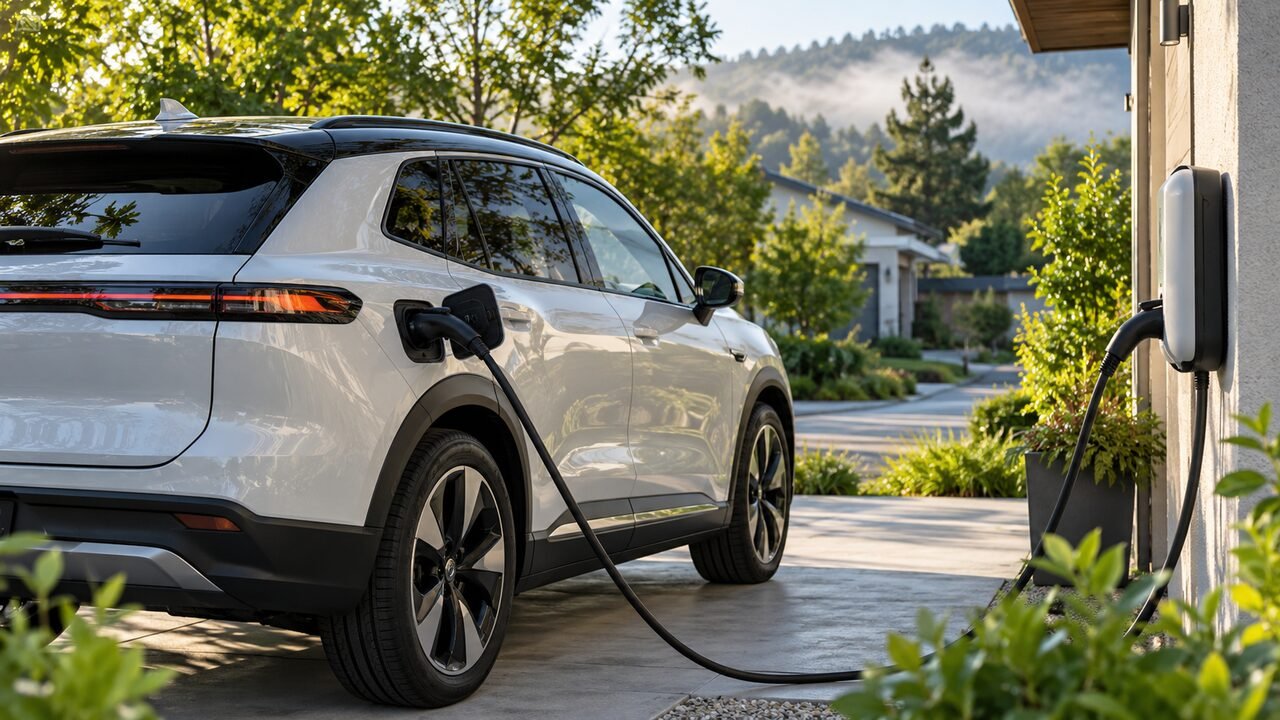
If practical, test a compatible AC charger and a public DC charger. Confirm that the connector locks normally, the charging session starts, and the car does not display persistent errors. Charging power varies with battery temperature and charge level, so one low power reading is not proof of battery damage.
Ask the seller to demonstrate the charging cable, adapters and charge-port door. Check that included accessories are correct for the market. If fast charging is central to your travel plans, verify it before paying rather than discovering a fault on your first long trip.
Compare battery health with the car’s real job
There is no magic health percentage that makes every used EV a good or bad buy. Your decision depends on how far you drive, where you charge and how much range you need in winter or hot weather. A small city car used for short commutes has different demands from a family vehicle used for motorway trips.
Imagine you drive 35 km a day and charge at home. A well-priced older EV with modest range loss may suit you. Now imagine a 500 km weekly trip in a region with few fast chargers. You may value more range, a strong charging curve and current battery warranty coverage.
Build a simple range buffer. Take a conservative real-world range estimate for your driving conditions, then subtract the distance you want left at the destination. Do not plan every journey around reaching a charger with almost no energy.
Put resale figures in perspective
The International Energy Agency’s Global EV Outlook 2026 shows that EV resale trends vary by region. It reported that in China in 2024, three-year-old electric cars retained about 46% of value, compared with roughly 55% across the wider used-car market. That is market-level data for a place and year, not a forecast for your particular car.
Prices shift with new-car discounts, financing, local tax rules, warranty confidence and supply. Compare similar age, mileage, trim, battery size and condition in your own market before deciding a listing is cheap.
How to use the report when negotiating
Start with three comparable local listings. Adjust for mileage, equipment, warranty and condition. Then consider the inspection report. A healthy pack with clear records supports the asking price. A weak or uncertain report calls for a professional assessment and possibly a lower offer.
Do not invent a battery replacement cost to frighten the seller or justify a discount. Ask an authorized service provider for a written diagnosis and repair estimate if a real fault exists. The repair choice may be different from replacing an entire pack.
If the seller promises a battery warranty, ask for it in writing with coverage limits, exclusions and claim process. A verbal promise is hard to verify later. If the vehicle is imported, check whether manufacturer service and battery warranty support apply in the country where you will use it.

Do you need to worry about battery replacement?
Replacement is a serious cost when it happens, but normal capacity loss is not the same as outright battery failure. Battery systems and warranties have improved across generations. A used car should be judged by its age, model, design, condition and records.
The IEA’s 2026 battery analysis describes a developing used and end-of-life battery market. Repair, reuse and recycling paths also differ by region. Do not assume every workshop can repair every pack or that a replacement pack is readily available.
Before buying an older or rare model, find a local service center that can handle its high-voltage system. Ask about diagnostic access, typical repair timelines and parts support. A reliable service route is part of the ownership cost.
What a careful buyer does on the final day
Check that the vehicle identity matches the paperwork and diagnostic report. Review the inspection findings without pressure. Confirm both keys, charging equipment and software access. Test the charge port one last time. Ensure outstanding finance and title concerns are cleared using the procedures in your country.
Keep copies of the listing, seller claims, warranty papers, inspection report and final invoice. These records can help if a problem appears later. If important facts are missing, it is reasonable to pause the purchase.

Frequently asked questions
Is 90% battery health good for a used EV?
It may be reasonable for some cars, but age, method of measurement, warranty and intended use matter. Compare the figure with reliable data for that model and request an independent inspection.
Can the dashboard range prove battery health?
No. It is an estimate shaped by recent energy use, weather and software. A diagnostic or independent health report provides different evidence, though it also has limits.
Should I reject a car that used DC fast charging often?
Not on that fact alone. Look for measured condition, fault history and a normal charging test. Battery design and temperature control differ by vehicle.
Can a battery warranty transfer to the next owner?
Sometimes. The answer depends on the maker, market, model and warranty terms. Verify the transfer and remaining coverage with an authorized source.
The bottom line
Buy the car, not the seller’s battery-health claim. Get a dated report, confirm the warranty, arrange an independent EV inspection and test charging when possible. Compare the result with your real driving needs and local service options. Those steps make a used EV purchase easier to judge and less likely to bring a costly surprise.