
Car Suspension Noises in 2026: Clunks, Squeaks and When to Get Help
When a car starts clunking or squeaking, it is easy to fear an expensive suspension repair. Sometimes the cause is small; sometimes it affects handling and safety. This guide helps you describe the noise, spot warning signs and ask a mechanic the right questions. It applies to many cars around the world, but the exact suspension design and safe repair method depend on the model.
Start by describing the sound
A clunk, squeak or rattle can have several causes. The sound alone rarely identifies one faulty part. Note when it happens: over a small bump, while turning, braking, reversing or driving at steady speed. Also note whether it comes from the front, rear or inside the cabin. Do not try to reproduce a noise with unsafe driving. A simple description of road surface, speed and temperature can help a workshop test the right conditions. Recording a short audio clip as a passenger may help if local law permits.
Make a symptom note
Write down speed, road surface, direction of turn, weather and whether the car was braking. A short log is more useful than saying only that the car makes a noise.
Common parts that wear
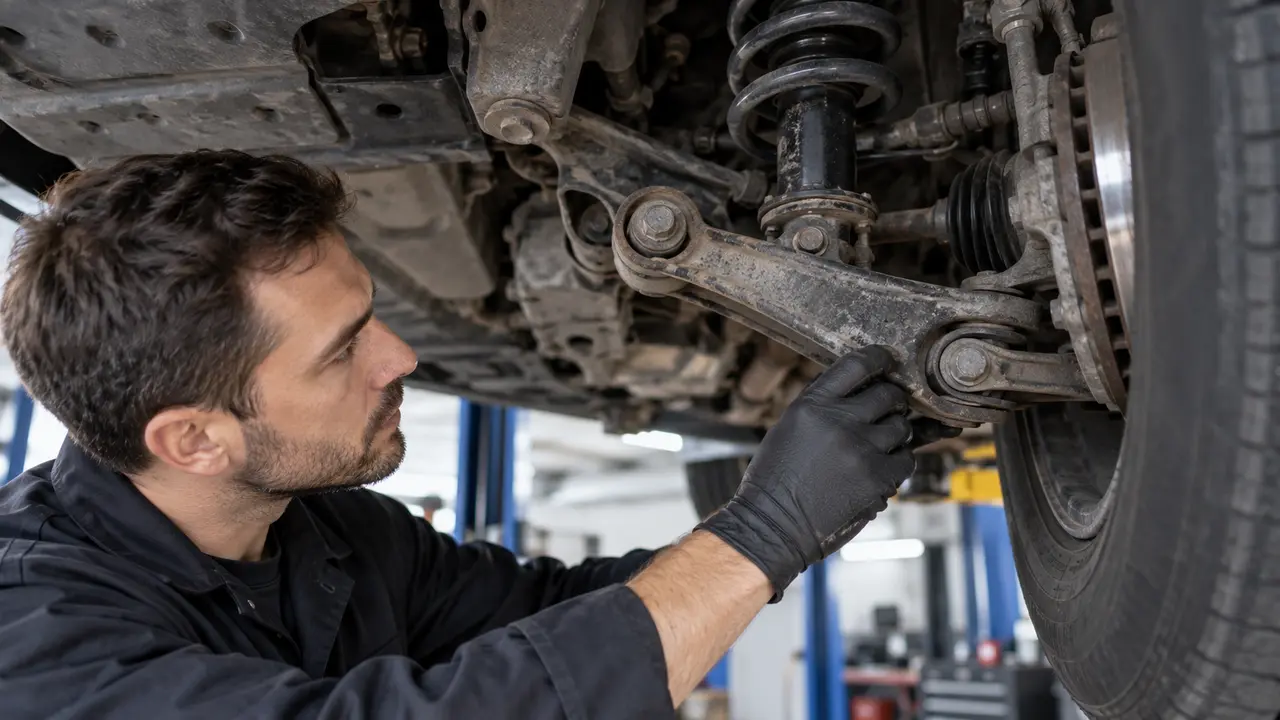
Suspension systems use springs, dampers, arms, bushes and joints to support the car and control wheel movement. Rubber bushes can harden or tear, joints can develop play and dampers can leak or lose control. The exact layout differs by model. A worn component can affect handling, tyre wear and comfort, but not every noise means the suspension is failing. The right response is inspection, not replacing a list of parts from an online forum. Ask a technician to show the wear if practical.
Clunks over speed bumps
A dull knock over low-speed bumps may involve a stabilizer link, bushing, mount or another loose component. Tools or loose items in the boot can sound similar. Before booking a repair, remove unsecured cargo and check whether the sound remains. If it does, ask a trained mechanic to inspect the vehicle on a suitable lift. Do not crawl beneath a car supported only by a jack. If steering or braking also feels unstable, prioritize an urgent safety assessment.
Squeaks while turning
A squeak may come from rubber joints, suspension pivots, brakes or even a body trim piece. Does it happen when the car is stationary and the wheel is turned, or only while moving? Does rain change it? These clues can help a mechanic. Avoid spraying random lubricant into suspension joints, especially near brakes and rubber parts. Some joints are sealed and need replacement rather than lubrication. The sound may be annoying without being dangerous, but persistent steering symptoms deserve prompt inspection.
Rattles at road speed
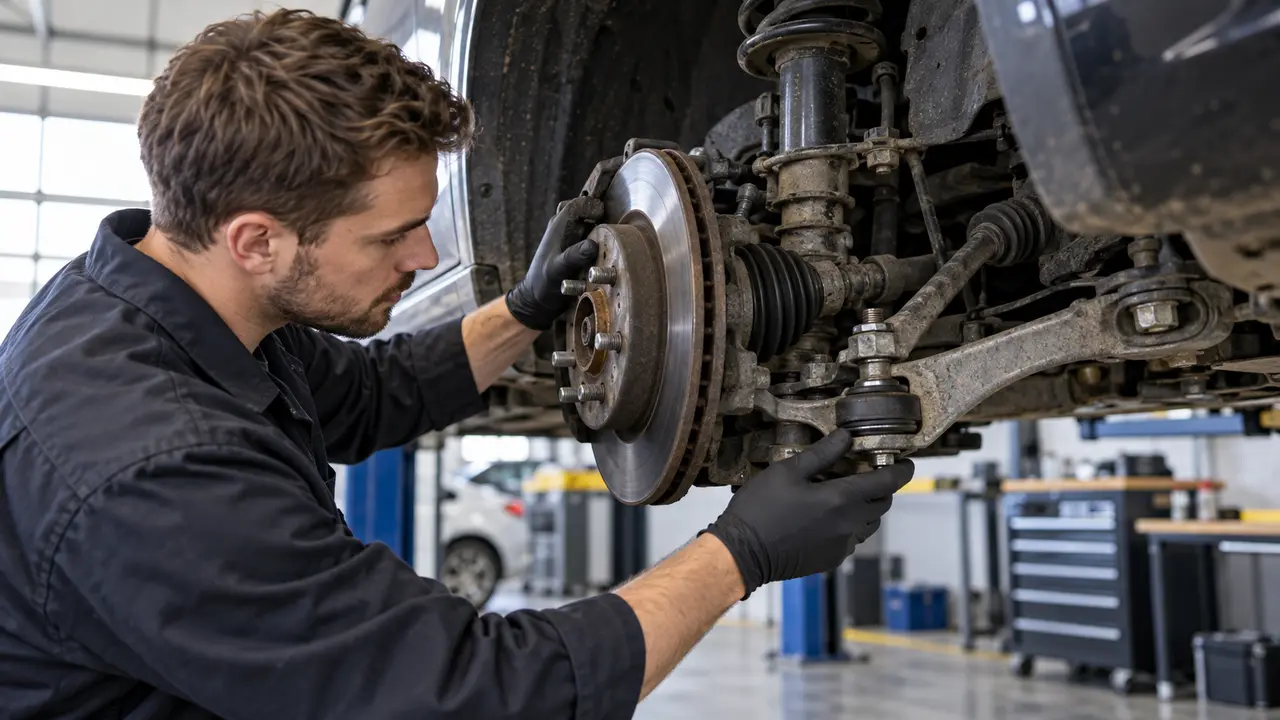
A rattle might come from underbody shields, exhaust mounts, interior trim or suspension hardware. Listen without taking attention from driving. If something drags on the road or the steering wheel shakes strongly, stop in a safe location and seek help. Do not reach under a hot car at the roadside. A workshop can secure loose shields and inspect mounts before assuming major suspension damage. Small repairs are sometimes simple, yet a loose safety-critical fastener should never be dismissed.
Michelin explains that patchy tyre wear can be linked to alignment or worn suspension parts. The pattern is a clue, not a diagnosis by itself.
Uneven tyre wear as a clue
Suspension and wheel alignment problems can show up as uneven tyre tread, but pressure, driving style and damaged tyres also contribute. Check tyre pressures against the maker’s recommendation and inspect the tread safely. Do not use a tyre that has exposed cords or serious damage. Ask a mechanic whether worn joints need repair before alignment is performed. Aligning a car with loose components may not solve the cause. Keep an eye on wear after the work to see whether the issue returns.

Dampers and ride control
A car that bounces repeatedly, feels unsettled on bends or dives strongly under braking may need a damper or suspension assessment. These feelings are subjective, so compare with how the same car usually behaves. A leak from a damper can be evidence of a fault, but minor marks may be normal depending on design. Ask for inspection and test results rather than a diagnosis based on one glance. Poor body control can affect safe handling, so do not postpone serious symptoms.
Steering and wheel bearings
Some sounds thought to be suspension faults come from steering components or wheel bearings. A humming noise that changes with speed may need bearing inspection; a clunk while steering might involve joints. Do not test wheel play by lifting a vehicle without appropriate equipment. A skilled workshop can separate steering, hub and suspension sources. If the car pulls strongly or steering feels loose, limit driving until it has been checked. The safest repair is the one based on a confirmed cause.

What a workshop should check
A sensible inspection covers tyre condition, wheel fasteners, joint play, bushes, mounts, dampers and signs of impact damage. The technician should test drive safely when needed and use a proper lift. Ask what is worn, how it was confirmed and whether the car is safe to drive before repair. Request an itemized quote for parts, labor and any alignment. Replacing both sides may be advisable for some components, but ask why. A clear explanation is better than a vague recommendation to replace the entire front end.
Ask for evidence
A shop should be able to describe how it found the worn part. A photo or demonstration can help you understand the estimate.
A typical owner example
A driver hears a small clunk on speed bumps. They remove loose items from the boot and record when the noise happens. A workshop finds a worn anti-roll-bar link, checks related joints and gives a repair quote. After replacing the confirmed part, the driver tests the same route and listens again. This avoids replacing dampers and arms without evidence. Now imagine the same noise with wandering steering: that changes the urgency and calls for a more immediate safety check.
Budget without false economy
Suspension repair prices vary by car, parts availability and local labor. Ask whether parts are original, approved aftermarket or another specified type, and what warranty applies. A very cheap repair can be costly if poor installation causes new tyre wear or repeated work. At the same time, an expensive estimate should explain each part. If unsure, seek a second independent assessment. Keep the alignment report and invoices. Good records help track recurring problems and support a future sale.
After the repair
Check whether the noise is gone and whether the car tracks normally on a safe test drive. Ask if wheel alignment, fastener recheck or tyre replacement is needed. The workshop should explain what changes in feel to expect. If the same noise returns, contact the repairer with the original invoice. Do not accept a persistent warning light or severe vibration as normal after suspension work. Follow vehicle-specific torque and service guidance rather than improvising a driveway repair without suitable tools.
Frequently asked questions
Can I drive with a suspension clunk?
It depends on the cause. If steering, braking or handling feels unsafe, stop driving and arrange urgent inspection.
Will wheel alignment fix a noise?
Not usually on its own. Worn or loose parts should be diagnosed and repaired first.
Are all suspension squeaks serious?
No, but persistent noise deserves inspection, especially with tyre wear, poor steering or body control.
Takeaway: Record when the sound occurs and seek a specific diagnosis before authorizing parts.