
Used Car Service History in 2026: How to Spot Gaps, Faults and Hidden Costs
A service record tells a story, but it is not the whole story
A used car can look clean and still have expensive work ahead. Service records help you find out how the car was cared for, what parts were changed, and whether faults kept coming back. A thick folder does not prove that every repair was done well. A blank folder does not always mean the owner ignored the car. The useful skill is reading dates, mileage, work descriptions, and evidence together before you make an offer.
Start by asking the seller for the maintenance schedule and all available invoices. Some brands now keep records online, while independent garages may provide paper or digital receipts. The format matters less than the details. You want a vehicle identifier, date, odometer reading, service provider, work carried out, and ideally the parts or fluids used. Personal contact details on old bills can be redacted without hiding the work.
Make a one-page timeline
Create a simple timeline from the oldest record to the newest. Put the date and mileage next to each job. Compare the gaps with the owner’s manual. Watch for mileage that moves backwards, repeated major repairs, and long stretches with no supporting evidence. There can be innocent reasons for missing records, such as a lost folder or a change in owner. Treat these as questions to check, not proof of fraud. A history report and independent inspection can add context.
Find the service items that matter most
The maintenance schedule is your starting point. Engine oil, brake fluid, coolant, transmission fluid, spark plugs, filters, belts, and tyres have different needs across models. Electric cars may have fewer engine-related items but still need tyres, brakes, coolant checks, cabin filters, and software or battery-system inspections where specified. Do not apply a generic mileage interval to every vehicle. Follow the exact make, model, engine, year, and market specification.
A receipt that says full service may cover only an oil change and a filter. Ask what was included. If the manual calls for a timing belt at a given age or distance, a vague stamp is not enough to show it was replaced. Request the invoice or part number. The same goes for complex automatic transmissions and cooling systems. An expensive scheduled job that is due soon should affect your budget and the price you are willing to pay.
Read the language on invoices
Look for words such as inspected, adjusted, replaced, advised, and declined. These do not mean the same thing. Inspected may mean a part was checked and found acceptable. Advised means the shop recommended work. Declined can mean the owner chose not to do it. If a brake or suspension item was repeatedly advised but never replaced, ask for a fresh inspection before buying. Keep your questions factual. The seller may not have understood the old invoice.
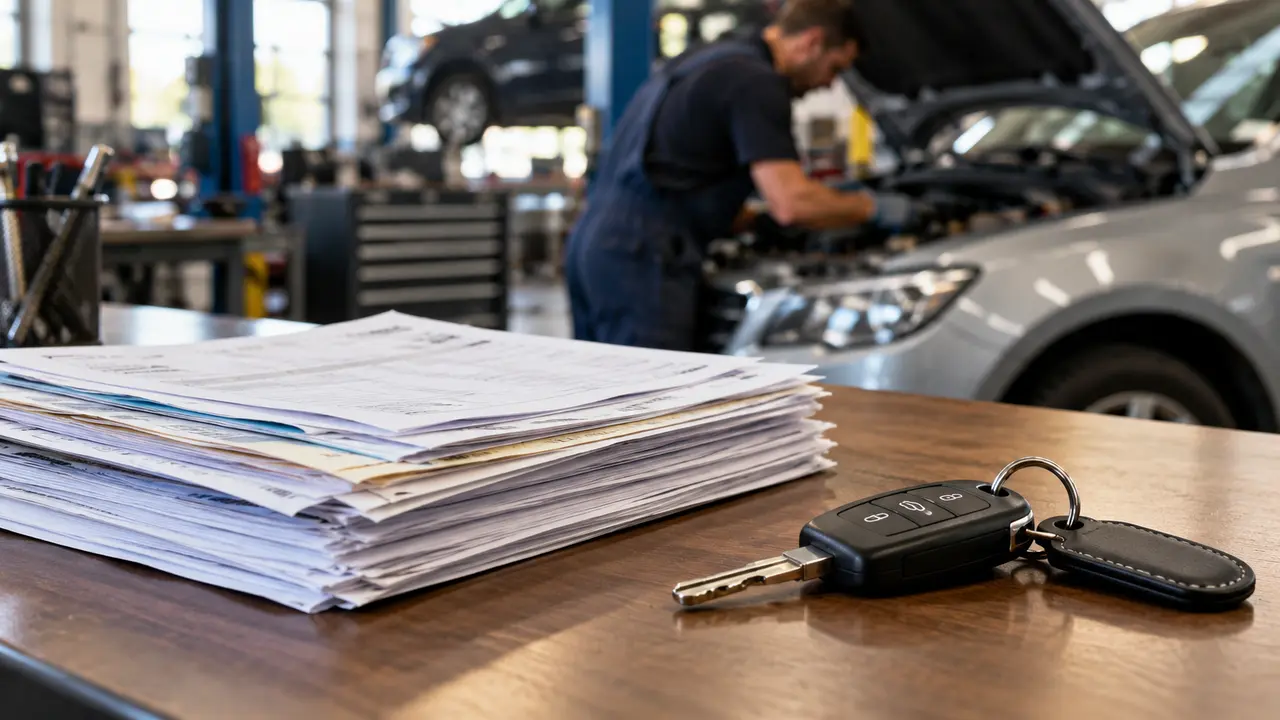
Match the records to the car in front of you
Check that the vehicle identification number or registration on the paperwork matches the car and the legal documents. A plate may change when a vehicle moves between regions, so use the permanent VIN when possible. Compare the model, engine, and trim with the invoices. A repair history from a similar car is not enough. Make sure the documents show the same vehicle rather than a family member’s car or another vehicle in a fleet.
Next, inspect wear and age. Fresh tyres on a high-mileage car can be normal. A nearly new tyre set next to worn suspension parts may suggest repairs are still due. A clean engine bay is not proof of good maintenance. Look for leaks, warning lights, uneven tyre wear, brake vibration, and unusual noises. An independent qualified mechanic can interpret these clues better than photos or seller assurances. Never skip the inspection because the records look tidy.
What digital service records can and cannot prove
Manufacturers and dealers often store work in a digital service database. Ask whether an authorized service center can provide a printout or confirmation with the seller’s consent. Coverage may be limited to that network. Work performed by independent garages may not appear. An entry may show a visit without proving all recommended repairs were completed. Digital history is useful, but it works best alongside actual invoices and a hands-on inspection.
Check recalls separately. A vehicle can have regular maintenance and still have an open safety recall. Use the maker’s official recall service or the relevant national vehicle safety authority. In the United States, the National Highway Traffic Safety Administration offers a VIN lookup; other countries have their own systems. A recall listing from another market may not match your car’s specification. Confirm locally and ask whether any required repair is complete.

Spot repeated faults, not just single repairs
One battery replacement or sensor repair is not automatically worrying. A pattern matters more. Suppose three invoices over six months mention a cooling-system fault, and the last one shows only a temporary fix. The buyer should ask whether the root cause was found. The same logic applies to recurring transmission warnings, electrical faults, water leaks, and air-conditioning failures. A seller who can explain the repair and show a clear final invoice gives you more useful information than a vague statement that everything works.
Be careful with fault codes. A code tells you which system reported a problem; it does not always identify the failed part. A cheap scan tool can miss manufacturer-specific data or old faults that were cleared. Pay for a diagnostic check when the car has a warning light, rough running, poor charging, or a strange driving symptom. Ask the mechanic for a written finding and an estimate rather than a guess based on one code.
Estimate the cost of deferred maintenance
Write down what is due in the next 12 months. Include tyres, brakes, fluid changes, scheduled belts, filters, battery condition, and any known faults. Request local workshop quotes, including labour and taxes. A low asking price can stop looking attractive once you add overdue work. Ask the seller whether they will complete a key job before sale or adjust the price. You do not need to negotiate every minor item. Focus on work that affects safety, reliability, or a large near-term expense.
Imagine two similar cars. Car A costs 1,000 units less but needs tyres, a timing-belt service, and brakes within months. Car B has proof those jobs were completed by a reputable workshop. If the combined work costs 1,600 units, Car B may be the better value even at the higher price. These numbers are illustrative and not tied to any currency or market. The lesson is to compare total purchase-and-repair cost, not only the advertised price.
A simple inspection budget
- Get the exact factory maintenance schedule for the vehicle.
- List missing or overdue major jobs from the records.
- Ask an independent mechanic to inspect the car.
- Price repairs using local written quotes.
- Leave a reserve for faults that records cannot reveal.

Ask the seller clear questions
Ask who serviced the vehicle during the current ownership, whether any major repairs were done after an accident, and whether any warning light or fault returns. Ask why there is a record gap and whether a workshop can confirm work. A calm, specific question often gets a more useful answer than accusing someone of hiding a fault. Keep copies of messages and documents where permitted. If the seller refuses an independent inspection or cannot explain serious inconsistencies, be willing to walk away.
Check the sale contract as carefully as the car. Consumer rights, warranties, disclosure duties, and title checks vary by country. Some markets distinguish dealer sales from private sales. Do not assume a phrase such as sold as seen removes every legal protection or, in the opposite direction, that every repair will be covered. Ask a local consumer body when the stakes are high. For general buying steps, see our used-car inspection and negotiation checklist.
After buying, build a clean baseline
Even with strong records, it helps to start ownership with a basic check. Confirm fluid levels and specifications, tyre pressures, spare tyre or repair kit, lights, wipers, and the next service due date. Save copies of the records in one folder. Enter reminders for age-based as well as distance-based tasks. If you discover a small issue, fix it early and keep the receipt. The next owner will find a clearer story than you did.
An honest service history is more than a row of stamps. It is evidence you can check against the car, the maintenance schedule, and independent inspection findings. Use it to identify risk and plan future costs. Do not buy because the folder looks impressive, and do not reject every car with one missing receipt. A careful, evidence-based decision is the best protection against an expensive surprise.

Sources and practical takeaway
The AAA automotive repair network provides consumer maintenance guidance, while manufacturers publish model-specific schedules and recall tools. Use these as starting points and confirm details for your vehicle. For your next viewing, bring the timeline, the schedule, and a written inspection booking. Those three simple tools do more than a seller’s promise of a fully maintained car.






One Comment